
Chemical vs. Mineral Sunscreen: What's Actually in Your Bottle?
Apr 11, 2025
If you've ever flipped over a sunscreen bottle and felt confused by the ingredient list, you're not alone. Most people have no idea what's actually in their sunscreen — or what it's doing to their body and the environment. Here's the truth about chemical sunscreens, why mineral sunscreen is the safer choice, and what you should look for next time you're shopping.
What's the Difference Between Chemical and Mineral Sunscreen?
Sunscreens fall into two categories based on how they protect your skin from UV radiation:
• Chemical sunscreens work by absorbing UV rays and converting them into heat, which is then released from the skin. Common active ingredients include oxybenzone, octinoxate, avobenzone, and octocrylene.
• Mineral sunscreens (also called physical sunscreens) sit on top of the skin and physically reflect UV rays. The active ingredients are naturally occurring minerals — most commonly non-nano zinc oxide and titanium dioxide.
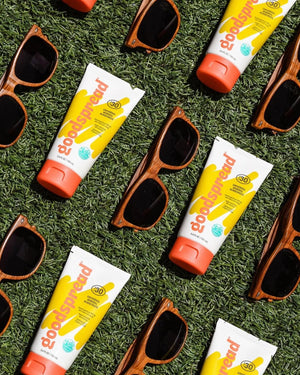
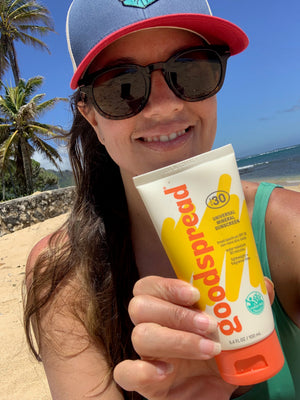
Goodspread is a mineral sunscreen, formulated with non-nano zinc oxide only.
The Health Concerns with Chemical Sunscreen Ingredients
Recent research has raised significant questions about the safety of several chemical UV filters. Here's what the science shows:
• Oxybenzone and several other chemical filters have been detected in the bloodstream, urine, and breast milk after just one application. A 2019 FDA study found that these chemicals can exceed safe thresholds with daily use.
• Oxybenzone is classified as a potential endocrine disruptor — meaning it may interfere with hormone signaling in the body, particularly mimicking estrogen.
• Chemical filters are a leading cause of contact dermatitis and sunscreen allergies, especially in children and people with sensitive skin.
• The FDA has requested additional safety data on many chemical UV filters and has currently only classified zinc oxide and titanium dioxide as GRASE (Generally Recognized as Safe and Effective).
That's not a reason to panic if you've been using chemical sunscreen — but it is a reason to consider switching to mineral.
The Environmental Impact: Coral Reefs at Risk
The damage doesn't stop at your skin. When you swim, shower, or rinse off your sunscreen, those chemical filters enter waterways — and they're devastating to marine ecosystems.
• Oxybenzone and octinoxate have been directly linked to coral bleaching, damage to coral DNA, and impaired reproduction in marine organisms.
• Studies have detected these chemicals in coral tissue, reef water, and fish in even the most remote ocean locations.
• Hawaii, Key West, the U.S. Virgin Islands, and Palau have all banned oxybenzone and/or octinoxate in sunscreens to protect their reef ecosystems.
Goodspread is fully compliant with Hawaii Act 104 — one of the strictest reef-protection sunscreen standards in the world. We never use oxybenzone, octinoxate, or other restricted chemical UV filters.
Why Mineral Sunscreen Is the Better Choice
Mineral sunscreens like Goodspread offer clear advantages:
• Non-toxic and non-hormone disrupting — zinc oxide has a decades-long safety record
• Safe for sensitive skin, children, and babies
• Reef-safe and environmentally friendly
• Works immediately upon application — no waiting period
• Broad-spectrum UVA + UVB protection
• FDA-classified as GRASE — the only UV filter category with this designation
Goodspread uses non-nano zinc oxide, meaning the particles are large enough that they cannot penetrate the skin or be absorbed by marine life. That's science working for people and the planet.
Making the Switch
Not all mineral sunscreens are created equal. Many older formulas left a thick white cast and felt heavy on the skin — which is exactly why so many people avoided them. Goodspread was formulated specifically to solve that problem.
Our mineral sunscreen blends in easily, feels lightweight on all skin tones, and is fragrance-free, vegan, and cruelty-free. Because the best sunscreen is the one you'll actually wear — and share.
Ready to make the switch? Shop Goodspread Mineral Sunscreen → goodspreadsuncare.com/collections/universal-sun-care